Bahir Dar and the monasteries of Lake Tana

Bahir Dar was a welcome change to Addis! After dealing with the taxi mafia at the airport, we were welcomed by streets lined with palm trees and lots of nice little cafes. It was still very busy on the street of course, but it had a more relaxed vibe.

On our first afternoon, we just walked around town a bit and discovered the colourful local market which was really really nice. After a while, Mathijs didn’t feel too shy about taking photos anymore, and there were just so many great subjects and scenes to photograph!

Later, we took a minivan to the Nile Bridge to see if we could spot some hippos. We did see two, but they were mainly under water and far away.

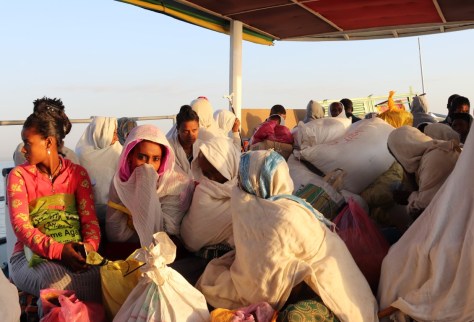
Next morning, we woke up very early to take the public ferry to the Zeghe peninsular. You can go on lots of tours to see the colourful monasteries of Laka Tana, but we always prefer to do things on our own. Ferry might be a bit of an exaggeration for the small boat, but it departed on time and the ride was beautiful and peaceful in the morning light.
IMG_3954 (Medium)

At Zege, we were welcomed by some chanting coming from the monastery Ura Kidane Meret. So we quickly walked up, past the still empty souvenir stalls to the ticket office which had to be opened up for us. Tours usually arrive here 1-2 h later only, so no one had expected tourists yet and we arrived to this amazing atmosphere. A group of men who were dressed as if they had climbed out of a history book were playing old musical instruments and chanting. It felt mystical and as if we were experiencing this very old culture.

It was special because there were no other tourists yet and it seemed like something they just did every morning, but that we were able to be part of that day. The paintings in the monastery were beautiful and nicer than expected, so we spent quite some time here – listening to the men and walking around taking pictures.

Later, we walked on to another monastery – Azwa Maryam – which was nice too and had some elaborate cruel paintings. Overall, it was quite similar to the first monastery though, and we imagine most other monasteries around the lake to look alike (unless you have a special interest in this area), hence concluded that seeing two of them would be enough for us! We were lucky to catch the same ferry on its way back to Bahir Dar and see some locals in their photogenic boats.

We still had some time left, so went back to our favourite market once again for another walk around and lots of pictures. This is more the kind of markets we like, compared to Addis‘ Merkato.

From Bahir Dar, we took a minivan to Gondar – a drive full of hassles and attempted tourist rip-offs…

Addis Abeba – time for Africa!

After two successive night fights, we landed in Addis Abeba dead tired and were happy that everything went smoothly with our hotel pickup. We were able to have breakfast at the nice buffet and our room was ready soon for some much needed catch-up on sleep.

Slightly more rested, we ventured to Piazza, an older area of Addis with some old buildings and churches. Here, we had our first Ethiopian meal and booked our flights to Bahir Dar. We were a bit shy still with taking out our big camera for photos, so sticked to quick phone pictures mainly. We had a brief walk around the Merkato area too, said to be the biggest market of Africa. Having freshly arrived, we found it a bit overwhelming though, and also not as picturesque as expected.

On our second day, we roughly followed a walking tour described in our guidebook, which led us to a couple of squares, churches and other remarkable buildings (or not so remarkable ones). The Tiglachen monument and the Holy Trinity Church were our favourite sights. Most other things were not really interesting.

To move around in Addis, we used local minibuses which worked well mostly – only sometimes we had to search a bit for the correct one. There’s also a tram line which connects some areas and was easy enough to use. Both were crowded and hectic – our introduction to the Ethiopian transportation system.

After 2 days in the capital, we were happy to move on to a smaller place – Bahir Dar.

Brazil – Summary & Pictures

People: Brazilians were generally friendly, but often difficult to interact with – not speaking any other language than Portuguese. I was seriously surprised by the low level of English and even Spanish, which is so similar. I ended up just speaking Spanish to people anyway, they would respond in Portuguese and we would understand each other somehow. We didn’t meet a lot of other travellers as we stayed in AirBnBs, but we didn’t feel like there are lots of international backpackers around.

Food: No lasting memory – not in a bad way, but also not in a good way. We cooked a lot for ourselves, but also ate out here and there.

Weather: Hot, hot, hot! We sweated a lot in Brazil, the sun was burning down most days. Unfortunately, we had some rainy days towards the end in Rio and Sao Paulo, but we managed to see most important sights in good weather.

Costs: Brazil was not cheap: accommodation and transport were the main cost drivers. Overall, we spent slightly over 44€/person/day.

Accommodation: We only stayed in AirBnBs which was still the cheapest option for the two of us – dorms and of course double rooms in hotels would have been more expensive. We did meet some nice locals this way (even though there was always a language barrier), so all in all it was good even if not cheap.

Infrastructure: Very good with a big choice in busses and affordable flights. We took one internal flight and otherwise bussed it around Brazil. For the first time, we also took lots of taxis (Uber!), especially in Rio and Sao, to stay safe. It was a bit annoying as we usually would have walked everywhere – but especially after my backpack drama, we just wanted to stay safe and not have any further issues.

Illnesses: All in all, everything was fine.

Safety: I didn’t feel very safe walking around in Rio and Sao Paulo – mostly due to the stories you hear, but there were also some genuinely weird people around and we called Sao Paulo „the city of the homeless“… We did everything we could to improve our safety, and luckily nothing happened.

Itinerary: We travelled Southern Brazil: Foz do Iguacu – Florianopolis – Rio – Ilha Grande – Paraty – Sao Paulo. Typical places to visit on a first visit in the South. I would love to see 1 or 2 national parks further North and some beaches up North, but maybe at a later stage in life, when the safety will hopefully have improved.

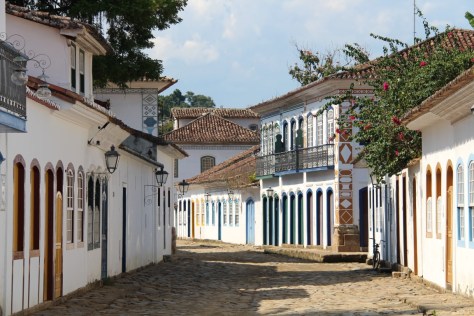
Highlight: Cute little Paraty.

Lowlight: Sao Paulo, potentially the world’s ugliest city.

Click on the photos below to see our full photo album of Brazil:

IMG_3738 (Medium)